Video Game Exploration #2: Long and Short Vowel Sort

Another game found on educationalgames.com is called the Long and Short Vowel Sort. This game targets the pre-school/kindergarten audience in helping them in their understanding of letter sound relationships. Similar to the previous game, players must complete certain levels before moving onto the next.

Pictured above is a map overview of the game. You can see how the different areas correspond to another topic, such as digraphs, segmenting, blending, sight words, and short vowels. Players are able to earn points and different awards throughout the game which helps keep the engaged and wanting more.

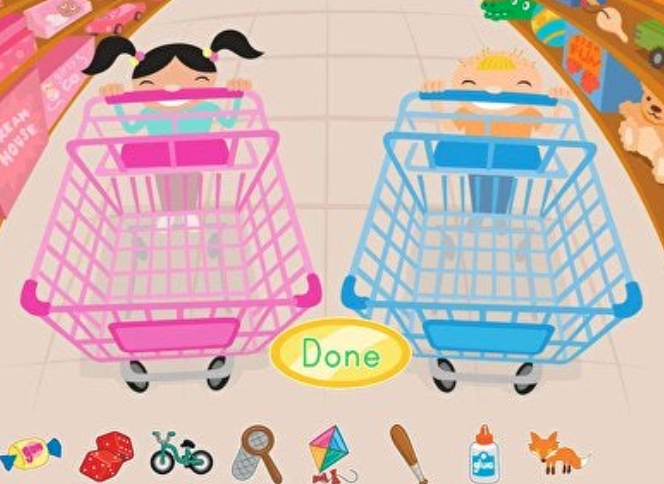
One aspect of the game which I thought to be efficient practice is the shopping cart short vowel exercise. In this exercise, players put all the pictures with a long vowel sound in one cart and all the pictures with a short vowel sound in the other cart. Targeted reading and writing practice is essential for students at this grade level, so this aspect of the game is excellent practice.

Blog Post 2: Video Game Exploration #1 (The Quest for the Complete Sentence)


For my video game exploration, I chose to explore the game The Quest for The Complete Sentence from the website, https://www.education.com/games/. This website offers various different educational games for young children in subjects such as math, reading, writing, and science. When you click on a game, there is additional information provided on the game, such as how it can be incorporated into a lesson, what subject area it falls under, what grade level it falls under, and any common core standards it acts with. 

The Quest for The Complete Sentence is fit for fourth graders, practicing their grammar skills, specifically identifying complete sentences vs. fragments. I believe this game falls under the simulation type, where the player must complete certain tasks before moving onto the next level. 

The game is set up as a sort of maze, where there is treasure at the end as a reward. Throughout the maze, I completed several different challenges dealing with complete sentences and sentence fragments. For example, one challenge consisted of two baskets: one labeled “complete sentence” and the other labeled “fragment”. There were four different sentences (set up as a type of word bank) above these baskets. My task was to drag what I thought to be a complete sentence into the “complete sentence” basket, and what I thought to be a fragment into the “fragment” basket. If I got these wrong, I had to repeat the task until I could move onto the next challenge. To add to the “game” aspect, this game allowed the player to control the movement of their character, collect coins, avoid holes (for the character to fall into, therefore ending the game), and gaining points. 

I felt as if this game was a good balance of fun and learning. It is efficient practice for students who are just learning what complete sentences are, as they will gain a better understanding of what it is when compared with a fragment sentence. It also allows for practice when the game will not allow the player to move on until they are able to complete all tasks correctly.

Blog Post 1: Introduction

Personal information
1. My name is Mlyssa Fojas. My pronouns are she/her.

2.  I am from Aurora, Ohio (about 40 minutes south of Cleveland).

4. This semester, I really want to try and get into a more healthier lifestyle. Being in college, it can be hard to maintain that, but recently I have been getting in the habit of going to the gym regularly and cooking my meals instead of eating out. I also enjoy shopping, traveling, trying out new restaurants, and spending time with my friends and family.

Learning Style and more:
5. I believe that in order to feel comfortable and open in a learning environment, you must be open and willing to learn/understand the views of your peers. Being mindful and considerate of others when discussing in class allows for a new way of thinking. In order to take creative risks in a course (and life in general), you must be willing to step out of your comfort zone. Examples of doing this in a classroom may be speaking up in class if you typically do not, sitting next to someone you don’t know, etc.

What have you been reading?

6. This article is from medium.com, titled Teaching — It’s about Inspiration, Not Information. It is significant to me because it reminds me that teaching is must be focused on the growth of students and less emphasis on teachers and how much information they can teach in a certain amount of time (similar to banking concept). https://medium.com/@tseelig/teaching-its-about-inspiration-not-information-1f64ddf019e7

About Dr. Shutkin: Specifically for this course, how can video games be effectively implemented into elementary classrooms?